Buy anhaengerverleih.eu ?
We are moving the project
anhaengerverleih.eu .
Are you interested in purchasing the domain
anhaengerverleih.eu ?
domain@kv-gmbh.de · 0541-91531010
Buy anhaengerverleih.eu ?
How are Latin subjunctive subordinate clauses still translated with the subjunctive?
Latin subjunctive subordinate clauses are still translated with the subjunctive in English to convey the same sense of uncertainty, possibility, or doubt. In English, the subjunctive mood is used to express hypothetical or unreal situations, wishes, recommendations, or demands. Therefore, when translating Latin subjunctive subordinate clauses, the English subjunctive is used to maintain the same mood and meaning of the original Latin sentence. **
Perhaps, subjunctive or indicative?
The choice between subjunctive or indicative depends on the context of the sentence. The subjunctive mood is used to express hypothetical or uncertain situations, wishes, recommendations, or doubts. On the other hand, the indicative mood is used for statements of fact or certainty. Therefore, if the sentence is expressing a possibility, doubt, or desire, the subjunctive mood would be more appropriate. **

Similar search terms for Subjunctive
Top-Angebote
Products related to Subjunctive:
-
PQube Sky Oceans: Wings for Hire for PlayStation 5 (Disc) - Role-Playing GameImmerse yourself in a heartfelt role-playing adventure with Sky Oceans: Wings for Hire for PlayStation 5. Inspired by classic Japanese role-playing games, this story-driven journey follows Glenn Windwalker as he assembles a spirited crew of sky pirates and stands against the powerful Alliance. Strategic airship battles require careful planning and timely use of abilities to change the course of battle. Develop your crew, improve your airships, and manage resources as the adventure unfolds. Explore a colorful world of floating settlements and diverse cultures, build a party of memorable sky pirates, and plan attacks in strategic turn-based dogfights. This physical edition is supplied on disc and is rated PEGI 12.15,49 £*Shipping: 3,95 £Secure redirect to the provider
-
Uplifted Finds SucceBuy 100lbs Bicycle Pet Trailer SucceBuy 100lbs Bicycle Pet TrailerTake your furry best friend on every cycling adventure with the SucceBuy Bicycle Pet Trailer. Built for safety and durability, this trailer features a heavyduty steel frame and a reinforced floor that can easily support dogs up to 100 lbs. The...834,97 $*Shipping: 0,00 $Secure redirect to the provider




-
Maybe subjunctive or indicative?
The choice between subjunctive or indicative depends on the context of the sentence. The subjunctive mood is used to express doubt, uncertainty, desire, or hypothetical situations, while the indicative mood is used for statements of fact or certainty. To determine whether to use subjunctive or indicative, consider the verb's relationship to reality and whether it is expressing a fact or a possibility. **
-
Conditional, subjunctive or indicative?
The choice between conditional, subjunctive, or indicative mood depends on the context of the sentence. The conditional mood is used to express a hypothetical situation or a condition that is dependent on something else happening. The subjunctive mood is used to express wishes, recommendations, or possibilities. The indicative mood is used to state facts or ask questions. **
-
What is the use of the present subjunctive and the past subjunctive?
The present subjunctive is used to express desires, doubts, wishes, or hypothetical situations in the present or future. It is often used after certain verbs and conjunctions that indicate uncertainty or subjectivity. The past subjunctive, on the other hand, is used to express desires, doubts, wishes, or hypothetical situations in the past. It is often used in the same way as the present subjunctive, but in reference to past events or situations. Both subjunctive forms are used to convey uncertainty or subjectivity in a sentence. **
-
Are the subjunctive I and the subjunctive II present in all tenses?
No, the subjunctive I and subjunctive II are not present in all tenses. The subjunctive I is only present in the present tense, while the subjunctive II is present in the past tense. The subjunctive I is used to express wishes, suggestions, or hypothetical situations in the present, while the subjunctive II is used to express wishes, suggestions, or hypothetical situations in the past. Each tense has its own specific form of the subjunctive mood. **


'It is strange that + subjunctive'
It is strange that she should be so calm in such a chaotic situation. **
When is the subjunctive used?
The subjunctive is used to express desires, doubts, wishes, possibilities, recommendations, or hypothetical situations. It is often used in dependent clauses following certain verbs or expressions that convey these meanings. The subjunctive mood is used to show uncertainty or subjectivity in a sentence, rather than stating a fact or certainty. It is important to pay attention to the context and the verb that triggers the use of the subjunctive in order to use it correctly. **
Top-Angebote
Products related to Subjunctive:
-
Sky Oceans: Wings for Hire PC Steam CD KeySky Oceans: Wings for Hire – PC Buy Cheap Sky Oceans: Wings for Hire PC Game Overview Sky Oceans: Wings for Hire is a story‑rich JRPG‑inspired adventure set in a world of floating islands and sky pirates. Lead your crew through turn‑based aerial dogfights, explore vibrant sky regions, upgrade your airship, and uncover a heartfelt narrative about courage, friendship, and freedom. With anime‑style visuals, strategic combat, and a nostalgic tone reminiscent of classic JRPGs, this title blends exploration, character bonding, and tactical battles into a polished modern experience. This PC version includes global activation and instant digital delivery. Key Features Turn‑Based Aerial Combat Engage in strategic sky battles with positioning, abilities, and party synergy. JRPG‑Inspired Storytelling A heartfelt narrative with memorable characters and emotional moments. Explore the Open Skies Travel between floating islands, discover secrets, and meet unique factions. Crew Management Recruit sky pirates, upgrade skills, and customize your party. Airship Upgrades Improve weapons, armor, and systems to take on tougher enemies. Stylized Anime Visuals Colorful environments and expressive character art. PC Enhanced Smooth performance, controller support, and Steam features included. Who This Game Is For Perfect for players who: Enjoy JRPGs and story‑driven adventures Like turn‑based combat with tactical depth Appreciate anime‑style visuals Want exploration mixed with character progression Enjoy indie RPGs with emotional storytelling Platform Details Platform: PC Region: Global Edition: Digital Activation Code Genre: JRPG, Turn‑Based, Story‑Rich, Adventure How to Activate (PC) Log in to your Steam account. Click Add a Game → Activate a Product on Steam . Enter your Sky Oceans: Wings for Hire PC code. Download and start playing instantly.2,12 £*Shipping: 0,00 £Secure redirect to the provider
-
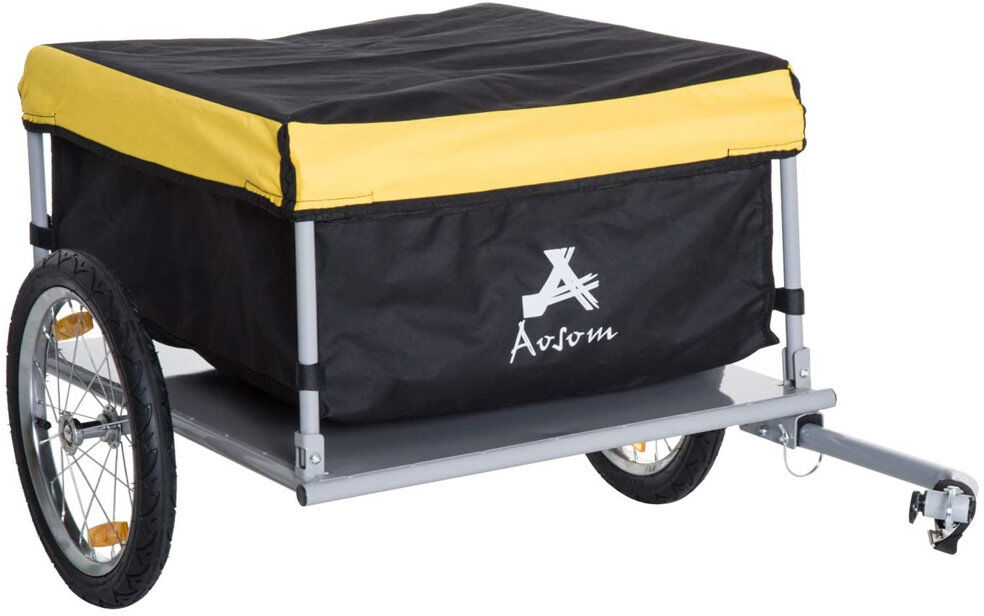
HOMCOM Vancouver Two-Wheel Bicycle Large Cargo Wagon Trailer Yellow Black;Yellow 67cm H X 73cm W X 73cm DThis cargo trailer attaches to almost any bicycle and has plenty of space for groceries, supplies, running routine errands, or your daily commute to work or school. A removable cover is included for protection, and a steel frame makes this cart durable with a weight capacity up to 40kg. HOMCOM74,99 £*Shipping: 0,00 £Secure redirect to the provider
-
PQube Sky Oceans: Wings for Hire for PlayStation 5 (Disc) - Role-Playing GameImmerse yourself in a heartfelt role-playing adventure with Sky Oceans: Wings for Hire for PlayStation 5. Inspired by classic Japanese role-playing games, this story-driven journey follows Glenn Windwalker as he assembles a spirited crew of sky pirates and stands against the powerful Alliance. Strategic airship battles require careful planning and timely use of abilities to change the course of battle. Develop your crew, improve your airships, and manage resources as the adventure unfolds. Explore a colorful world of floating settlements and diverse cultures, build a party of memorable sky pirates, and plan attacks in strategic turn-based dogfights. This physical edition is supplied on disc and is rated PEGI 12.15,49 £*Shipping: 3,95 £Secure redirect to the provider
-
Uplifted Finds SucceBuy 100lbs Bicycle Pet Trailer SucceBuy 100lbs Bicycle Pet TrailerTake your furry best friend on every cycling adventure with the SucceBuy Bicycle Pet Trailer. Built for safety and durability, this trailer features a heavyduty steel frame and a reinforced floor that can easily support dogs up to 100 lbs. The...834,97 $*Shipping: 0,00 $Secure redirect to the provider
-
How are Latin subjunctive subordinate clauses still translated with the subjunctive?
Latin subjunctive subordinate clauses are still translated with the subjunctive in English to convey the same sense of uncertainty, possibility, or doubt. In English, the subjunctive mood is used to express hypothetical or unreal situations, wishes, recommendations, or demands. Therefore, when translating Latin subjunctive subordinate clauses, the English subjunctive is used to maintain the same mood and meaning of the original Latin sentence. **
-
Perhaps, subjunctive or indicative?
The choice between subjunctive or indicative depends on the context of the sentence. The subjunctive mood is used to express hypothetical or uncertain situations, wishes, recommendations, or doubts. On the other hand, the indicative mood is used for statements of fact or certainty. Therefore, if the sentence is expressing a possibility, doubt, or desire, the subjunctive mood would be more appropriate. **
-
Maybe subjunctive or indicative?
The choice between subjunctive or indicative depends on the context of the sentence. The subjunctive mood is used to express doubt, uncertainty, desire, or hypothetical situations, while the indicative mood is used for statements of fact or certainty. To determine whether to use subjunctive or indicative, consider the verb's relationship to reality and whether it is expressing a fact or a possibility. **
-
Conditional, subjunctive or indicative?
The choice between conditional, subjunctive, or indicative mood depends on the context of the sentence. The conditional mood is used to express a hypothetical situation or a condition that is dependent on something else happening. The subjunctive mood is used to express wishes, recommendations, or possibilities. The indicative mood is used to state facts or ask questions. **
Similar search terms for Subjunctive
-
Homcom Aosom Kids Ride-On Excavator, Pedal Car Bulldozer, Move Forward/Back with Real Working Dirt Bucket, 6 Wheels, & Cargo TrailerDescriptions:Let your little construction worker have some outdoor fun while getting the feel of the real thing with this ride-on toy excavator by Aosom.91,29 $*Shipping: 0,00 $Secure redirect to the provider
-
What is the use of the present subjunctive and the past subjunctive?
The present subjunctive is used to express desires, doubts, wishes, or hypothetical situations in the present or future. It is often used after certain verbs and conjunctions that indicate uncertainty or subjectivity. The past subjunctive, on the other hand, is used to express desires, doubts, wishes, or hypothetical situations in the past. It is often used in the same way as the present subjunctive, but in reference to past events or situations. Both subjunctive forms are used to convey uncertainty or subjectivity in a sentence. **
-
Are the subjunctive I and the subjunctive II present in all tenses?
No, the subjunctive I and subjunctive II are not present in all tenses. The subjunctive I is only present in the present tense, while the subjunctive II is present in the past tense. The subjunctive I is used to express wishes, suggestions, or hypothetical situations in the present, while the subjunctive II is used to express wishes, suggestions, or hypothetical situations in the past. Each tense has its own specific form of the subjunctive mood. **
-
'It is strange that + subjunctive'
It is strange that she should be so calm in such a chaotic situation. **
-
When is the subjunctive used?
The subjunctive is used to express desires, doubts, wishes, possibilities, recommendations, or hypothetical situations. It is often used in dependent clauses following certain verbs or expressions that convey these meanings. The subjunctive mood is used to show uncertainty or subjectivity in a sentence, rather than stating a fact or certainty. It is important to pay attention to the context and the verb that triggers the use of the subjunctive in order to use it correctly. **
* All prices are inclusive of VAT and, if applicable, plus shipping costs. The offer information is based on the details provided by the respective shop and is updated through automated processes. Real-time updates do not occur, so deviations can occur in individual cases. ** Note: Parts of this content were created by AI.